Quality solar, battery, and energy systems
designed for the Thompson Okanagan.
Built with care. Installed with integrity.
Engineered to deliver clean power for
decades.
Across the Thompson-Okanagan, more businesses are exploring commercial solar projects as a practical way to manage operating costs and strengthen their sustainability strategy.
For farms, wineries, manufacturing facilities, warehouses, and commercial properties in Vernon, Kelowna, Salmon Arm, and surrounding communities, solar is no longer a symbolic investment. It is increasingly viewed as infrastructure. When designed properly, commercial solar projects reduce long-term electricity expenses, improve energy predictability, and demonstrate measurable environmental leadership.
This article explains how commercial solar works for businesses in the Okanagan, why agricultural and commercial properties are particularly well suited for solar, and how current rebates and tax incentives affect project viability in 2026.
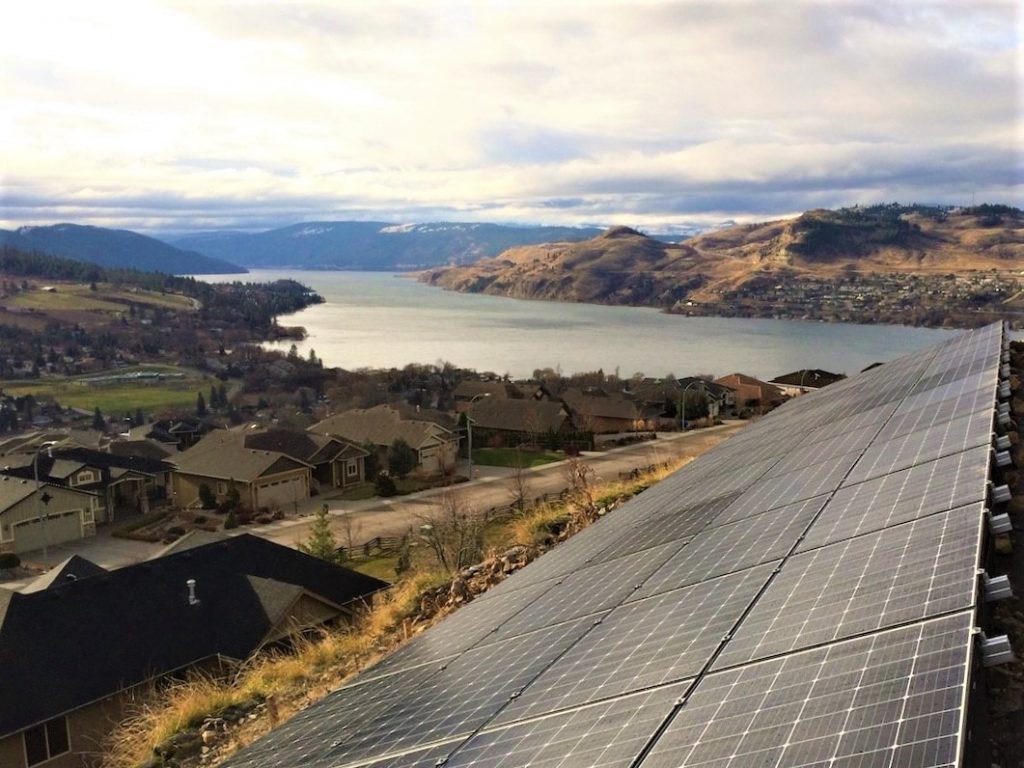
Energy costs are one of the few operating expenses that businesses cannot fully control. Electricity rates are influenced by infrastructure upgrades, demand growth, and long-term utility planning. While BC Hydro rates remain relatively stable compared to many regions, commercial rate structures still expose businesses to long-term increases.
Commercial solar projects help businesses:
Unlike short-term cost cutting measures, solar provides consistent output over decades. Panels typically carry 25-year performance warranties, and system production can be monitored and verified in real time.
One of the strongest advantages of commercial solar projects is the physical suitability of many business properties.
Warehouses, cold storage facilities, retail buildings, and industrial sites often have expansive flat or low-slope roofs. These surfaces are typically:
This allows for efficient system layout and streamlined electrical integration.
Commercial operations frequently consume the most electricity during daylight hours. That aligns well with solar production.
For example:
Because solar energy is used first on site before being exported to the grid, high daytime usage improves the economic performance of commercial solar projects.
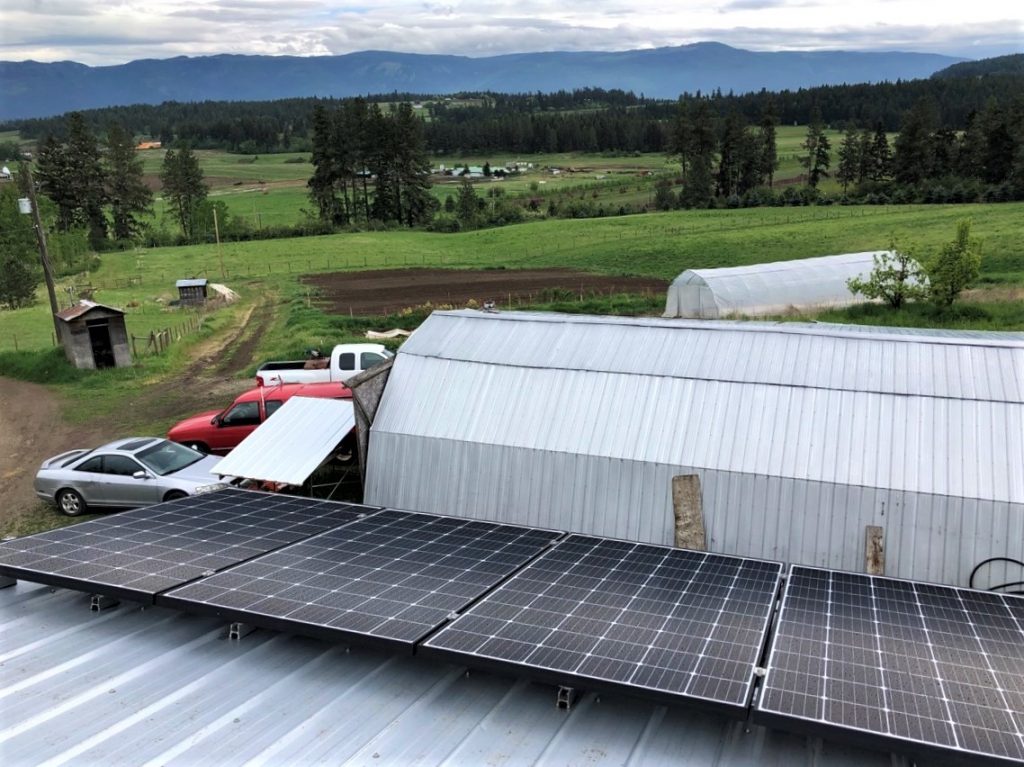
The Okanagan’s agricultural sector is particularly well suited to solar.
Farms often have:
Agricultural operations also tend to have stable long-term ownership, which aligns well with the long life cycle of solar systems.
For many farm operators, solar supports both cost control and brand positioning. Sustainability increasingly matters to distributors, retailers, and consumers.
In most of the Okanagan, commercial customers are served by BC Hydro. In parts of Kelowna, FortisBC Electric provides service.
Under BC Hydro’s Self-Generation program, excess electricity from eligible commercial solar projects can be exported to the grid for bill credits. These credits are applied to future consumption according to program rules.
This allows businesses to:
Commercial solar systems are typically designed to offset a portion of annual usage rather than significantly overproduce.
Commercial solar economics in 2026 are influenced by both provincial programs and federal tax measures.
As of 2026, BC Hydro offers rebates for eligible commercial solar and battery installations, subject to program requirements and funding availability. These rebates can help reduce upfront capital costs and improve project payback timelines.
Eligibility, system sizing limits, and application processes must be confirmed at the time of project planning, as programs evolve.
The federal Clean Technology Investment Tax Credit provides a refundable tax credit for eligible clean energy equipment, including solar photovoltaic systems, when installed by taxable Canadian businesses.
For qualifying businesses, this credit can significantly reduce net project cost. As with any tax measure, eligibility depends on corporate structure, installation date, and compliance with program requirements. Businesses should confirm details with their accountant or tax advisor.
These combined incentives often make commercial solar projects more financially viable than in previous years, particularly for energy-intensive operations.
Beyond direct cost savings, commercial solar projects support sustainability leadership.
Businesses in the Okanagan increasingly face expectations from:
Solar installations provide visible, measurable proof of emissions reduction efforts. Energy production data can be incorporated into ESG reporting, sustainability disclosures, or marketing communications.
For agricultural producers, wineries, and food processors, renewable energy can strengthen brand positioning in environmentally conscious markets.
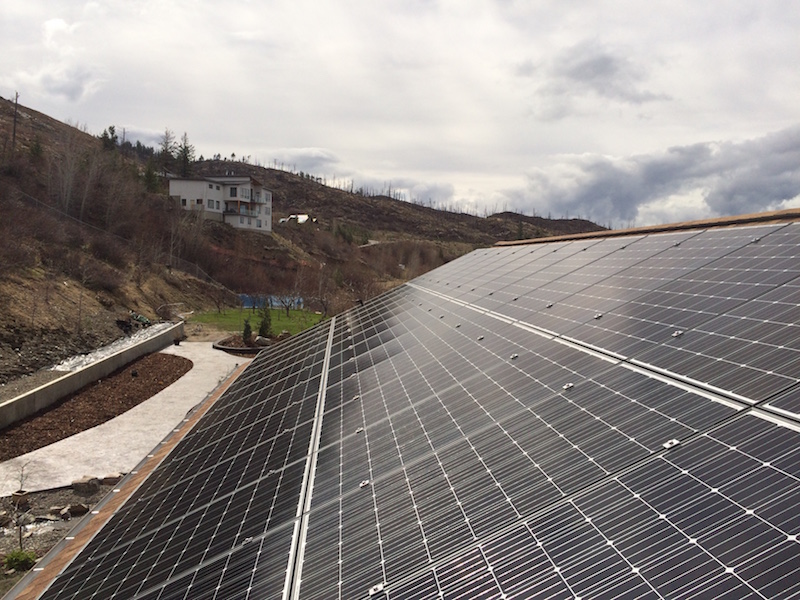
Commercial solar projects function more like infrastructure upgrades than short-term improvements.
Benefits include:
When systems are engineered properly and installed to Canadian Electrical Code standards, they provide stable output for decades.
For property owners, solar can also enhance asset value by reducing operating costs and improving building performance.
Every commercial solar project requires:
System sizing must be based on actual consumption data and business goals. Oversizing beyond interconnection limits or consumption patterns can reduce financial efficiency.
A professional feasibility assessment ensures realistic expectations and defensible financial projections.
Are commercial solar projects only suitable for large corporations?
No. Many mid-sized businesses, farms, and industrial facilities in the Okanagan are well suited for commercial solar, provided they have sufficient roof or ground space and meaningful daytime energy use.
Do businesses receive cash payments for excess solar energy?
Under current BC Hydro programs, excess energy generates bill credits rather than direct cash payments.
How long do commercial solar systems last?
Solar panels are typically warrantied for 25 years, with gradual and predictable performance decline over time. Inverters and other components have separate warranties.
Are federal tax credits guaranteed?
Eligibility depends on federal policy at the time of installation and the structure of the business. Companies should confirm with their tax professional.
Is solar a good fit for farms in the Okanagan?
Often yes. Agricultural buildings and land layouts frequently provide strong conditions for efficient system design, particularly when daytime irrigation or refrigeration loads are present.
For many organizations across Vernon and the wider Thompson-Okanagan, commercial solar projects represent more than an environmental initiative. They are a long-term operational strategy.
By aligning energy production with daytime consumption, leveraging available rebates and tax credits, and investing in durable infrastructure, businesses can improve cost stability while demonstrating measurable sustainability leadership.
When carefully engineered and professionally installed, commercial solar becomes part of a company’s long-term foundation rather than a short-term experiment.

5101 25th Ave, Vernon, BC


