Quality solar, battery, and energy systems
designed for the Thompson Okanagan.
Built with care. Installed with integrity.
Engineered to deliver clean power for
decades.
For homeowners considering solar, the biggest question is often simple: How does this actually save me money?
While solar is frequently discussed as a clean energy solution, its financial value comes from how it interacts with your local utility, how electricity credits are applied, and how those savings accumulate over time. In the Okanagan, understanding this starts with knowing how local utilities structure solar programs and how energy offsets really work.
This article breaks down energy cost savings in practical terms, focusing on utility bill offsets, long-term value, and what return on investment looks like for solar homeowners across Vernon, Kelowna, and the surrounding region.
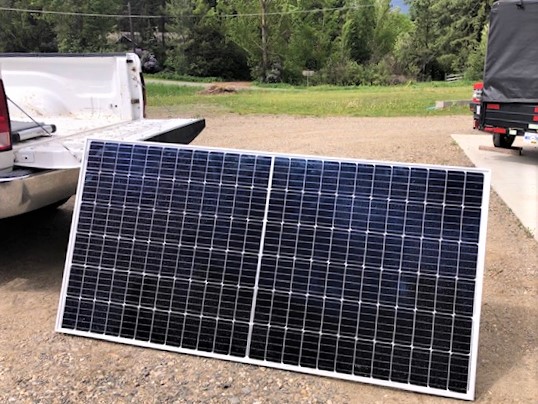
Most of the Okanagan is served by BC Hydro, which is the primary electricity provider in Roost Solar’s service area. However, parts of the Central Okanagan, including Kelowna, are served by FortisBC Electric.
This distinction matters because each utility uses different terminology and billing structures for solar customers.
BC Hydro refers to customer owned solar generation as Self-Generation, while FortisBC Electric uses the term Net Metering. Although the names differ, both programs are designed to credit customers for excess electricity their solar systems produce.
Solar systems reduce electricity costs by producing power directly at your property. When your system generates electricity, that energy is used first by your home or business. This reduces the amount of electricity you need to purchase from the utility.
If your system produces more electricity than you are using at a given moment, that excess energy is sent to the grid.
• Under BC Hydro’s Self-Generation program, exported electricity earns bill credits
• Under FortisBC Electric’s Net Metering program, exported electricity also generates credits
These credits are then applied to future electricity usage, helping offset times when your solar system is producing less, such as evenings or winter months.
Get a free estimate for your property
Solar production in the Okanagan is highly seasonal. Long summer days typically generate more electricity than most households consume, while winter months produce less due to shorter daylight hours.
Utility credit systems are designed to balance this difference over time.
Excess production during higher generation months builds credits on your account. Those credits are then applied later when your home draws more electricity from the grid than your solar system is producing. Over the course of a year, many homeowners are able to offset a significant portion of their total electricity consumption.
This seasonal balancing is a key reason solar works well in the Okanagan’s climate.
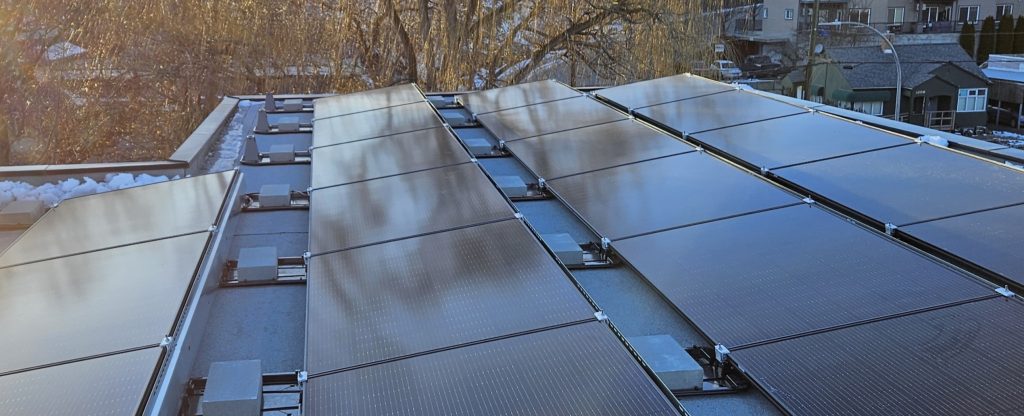
Solar return on investment is not measured the same way as traditional financial products. Instead, it is typically evaluated through avoided energy costs and long-term stability.
Key contributors to solar ROI include:
• Reduced monthly electricity bills
• Protection from future electricity rate increases
• Long system lifespan with predictable performance
• Transparent production data through monitoring systems
Rather than generating cash payouts, solar delivers value by reducing ongoing expenses. Over time, these avoided costs can add up to substantial savings.
Utility programs like Self-Generation and Net Metering are essential to solar’s financial value. Without them, excess electricity would be lost rather than credited.
These programs allow homeowners to:
• Maximize the value of daytime solar production
• Use the grid as a virtual energy bank
• Offset electricity use year-round, not just during sunny months
For most grid connected systems, these programs are what make solar financially viable over the long term.
One reason homeowners view solar as a tangible investment is transparency. Solar systems come with monitoring tools that show exactly how much electricity is produced, consumed, and exported.
This allows homeowners to:
• Track savings over time
• Compare production year to year
• Understand how system performance aligns with utility bills
Unlike many home upgrades, solar performance is measurable and verifiable.
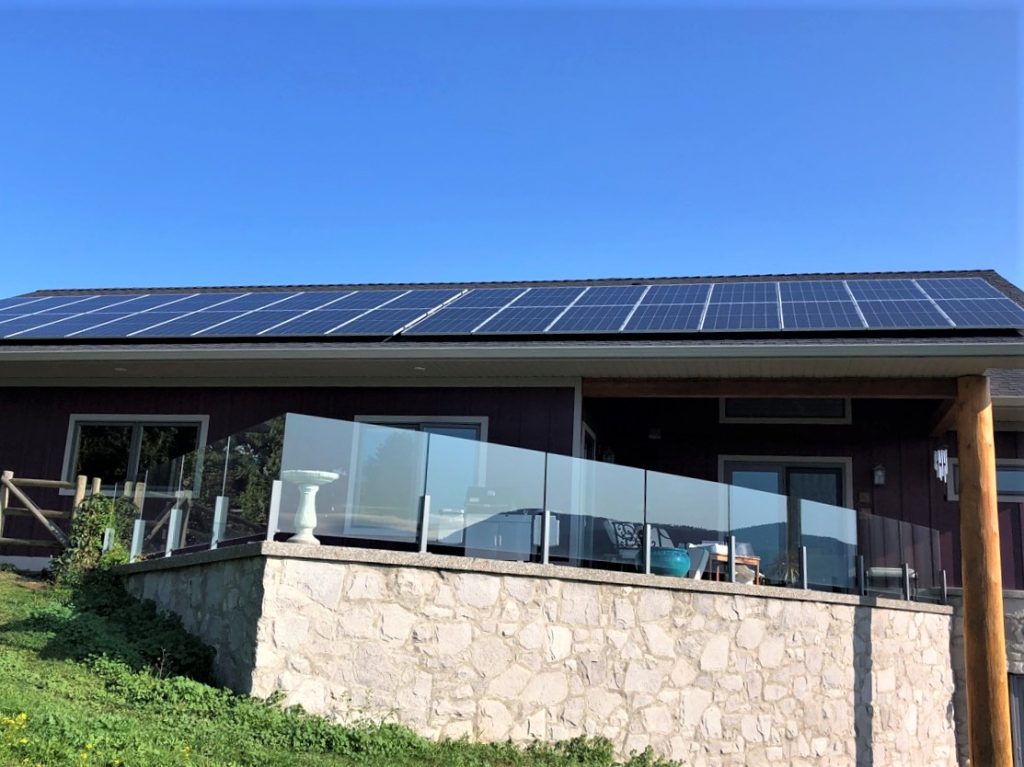
Electricity rates tend to rise over time, while solar production remains relatively stable. Once installed, a solar system continues producing electricity for decades with gradual and predictable performance decline.
For many Okanagan homeowners, this stability is just as important as direct savings. Solar reduces dependence on future utility pricing and provides confidence in long-term household energy costs.
How much of my utility bill can solar offset?
This depends on system size, energy usage, and site conditions. Many homeowners aim to offset a significant portion of their annual electricity consumption rather than eliminating bills entirely.
What happens to unused credits?
Under both Self-Generation and Net Metering programs, credits are carried forward and applied to future bills according to each utility’s program rules.
Does solar still save money if I am connected to the grid?
Yes. Grid connected systems are the most cost-efficient way of going solar. Grid connection is essential for most solar savings models, as it allows excess production to be credited and used later.
Is solar ROI guaranteed?
Solar performance is predictable, but total savings depend on usage patterns, electricity rates, and system design. A professional assessment ensures expectations are realistic and accurate.
Can monitoring show real financial savings?
Yes. Monitoring platforms allow homeowners to compare energy production with utility consumption, providing clear insight into how solar offsets electricity costs.

5101 25th Ave, Vernon, BC


