Quality solar, battery, and energy systems
designed for the Thompson Okanagan.
Built with care. Installed with integrity.
Engineered to deliver clean power for
decades.
Grid-tied solar is the most common type of solar installation in British Columbia and across the Okanagan. It is also the simplest to understand once you break it down into how power flows, how safety is handled, and how the system interacts with the utility grid.
This guide explains how grid-connected solar systems work, what happens to the electricity your panels produce, and why this approach makes sense for many homes and businesses in the Okanagan in 2026.
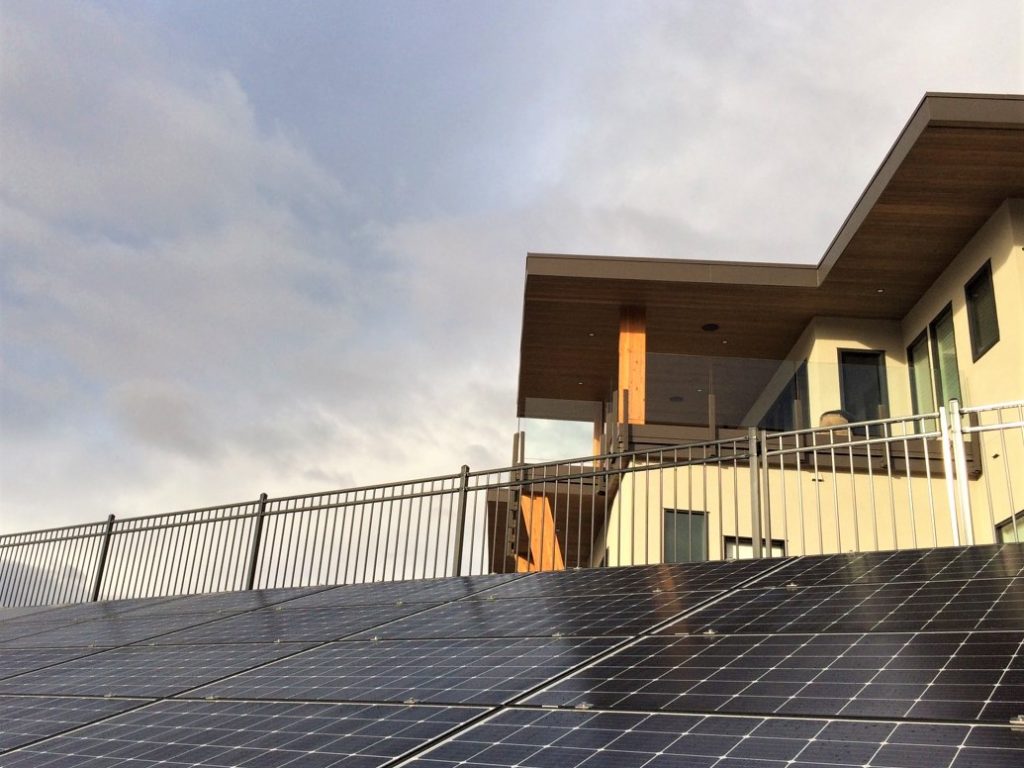
A grid-tied solar system is connected directly to the local utility grid. In the Okanagan, that means your solar system operates in coordination with BC Hydro.
The system allows your property to:
• Use solar power when it is available
• Draw electricity from the grid when it is not
• Send excess solar energy back to the grid
There is no isolation from the utility. Instead, your solar system works alongside it.
The process is straightforward and highly regulated.
This switching happens instantly and seamlessly. There is no manual intervention required from the homeowner.
The inverter is the control center of a grid-tied solar system.
In modern systems, the inverter:
• Converts DC to AC electricity
• Synchronizes solar power with grid voltage and frequency
• Monitors system performance
• Detects grid outages
• Shuts the system down automatically if the grid goes offline
This automatic shutdown is a safety requirement in British Columbia. It protects utility workers by ensuring solar systems do not send power into the grid during outages.
Without battery storage, grid-tied systems do not provide backup power during blackouts.
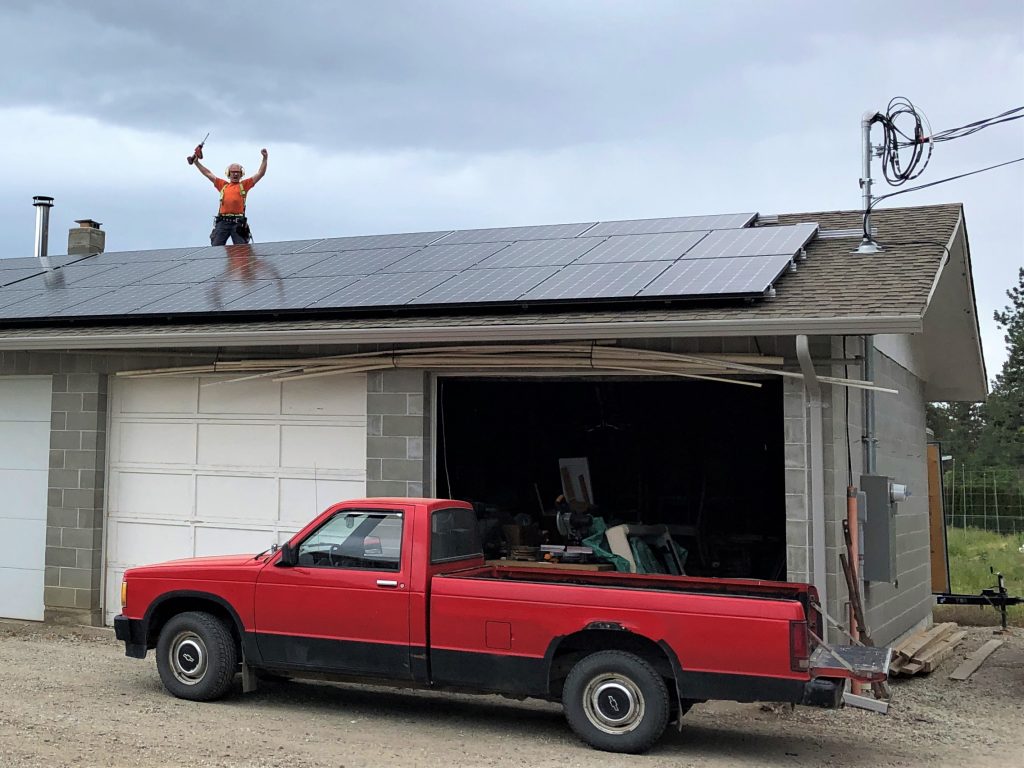
Grid-tied systems in the Okanagan typically operate under BC Hydro’s self-generation program.
Self-generation allows:
• Excess solar energy to be exported to the grid
• Credits to accumulate on your utility account
• Credits to offset electricity used later
This is especially important in the Okanagan, where solar production peaks in summer while electricity use often increases in winter.
Self-Generation helps balance seasonal differences, but it does not eliminate your connection to the grid.
The Okanagan has several characteristics that make grid-tied solar particularly effective:
• Strong annual solar exposure
• Long summer daylight hours
• Seasonal energy usage patterns
• A stable provincial utility structure
Because grid-tied systems rely on annual performance rather than daily output, they are well suited to this climate. Summer overproduction helps offset lower winter generation.
It is important to be clear about limitations.
A standard grid-tied system:
• Does not provide power during outages
• Does not store electricity on its own
• Does not eliminate your utility bill entirely
Homeowners who require backup power must add battery storage. That changes system design and cost and should be evaluated separately.
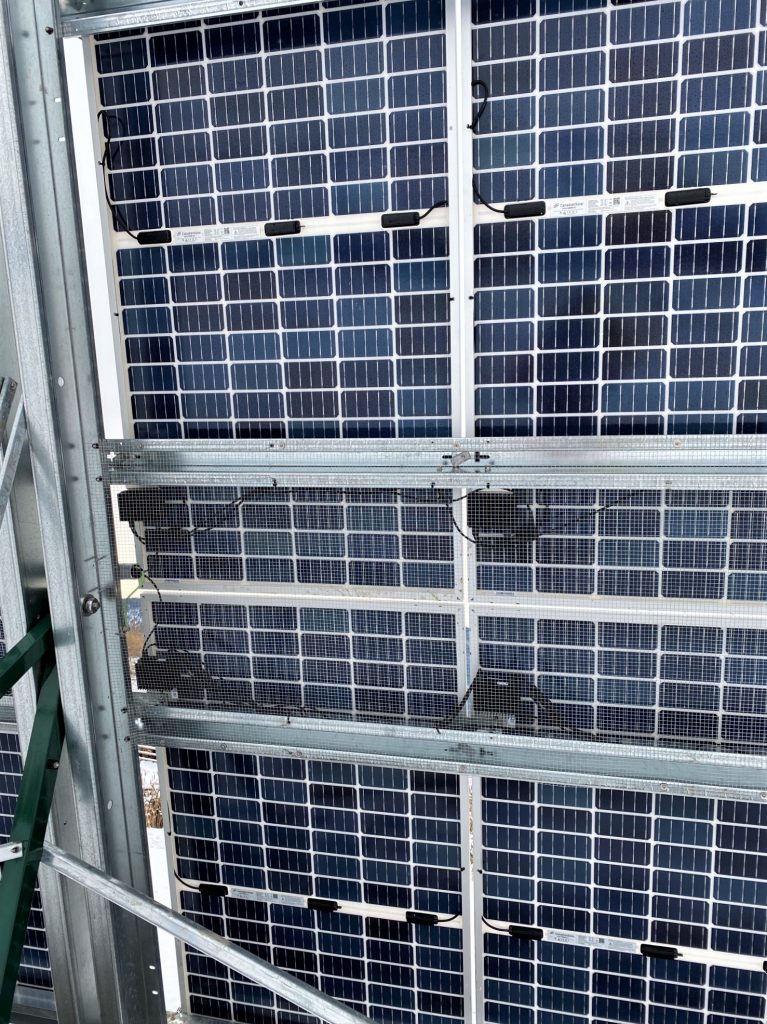
Grid-tied systems are usually sized to offset a portion of annual electricity usage rather than match peak demand exactly.
Design decisions are based on:
• Historical electricity consumption
• Roof orientation and shading
• Available roof or ground space
• Utility interconnection limits
In the Okanagan, many residential systems aim to offset between 70 and 100 percent of annual usage, depending on site conditions and goals.
Every grid-tied solar system must meet strict requirements.
A compliant installation includes:
• Electrical permits
• Utility interconnection approval
• Inspection by Technical Safety BC
• Adherence to Canadian Electrical Code
These steps ensure the system is safe, durable, and approved to operate in parallel with the grid.
Get a free estimate for your property
Does a grid-tied system work during a power outage?
No. Without battery storage, grid-tied systems shut down automatically during outages for safety reasons.
Can I add batteries later to a grid-tied system?
Yes. Many systems are designed to allow battery storage to be added in the future, though this requires additional equipment and approvals.
Is net metering guaranteed forever?
Net metering programs are subject to policy changes. However, existing systems are typically grandfathered under the rules in place at the time of approval.
How much maintenance does a grid-tied system require?
Very little. Most systems require occasional visual checks and performance monitoring. There are no moving parts.
Is grid-tied solar suitable for rural Okanagan properties?
Yes, provided grid access exists and interconnection requirements are met. Rural properties often have excellent solar exposure.
Grid-tied solar systems are designed to be simple, safe, and predictable. They allow Okanagan homeowners to reduce electricity costs, stabilize long-term energy expenses, and participate in clean energy generation without complex infrastructure.
At Roost Solar, grid-connected systems are designed based on real consumption data, site-specific conditions, and current utility rules. The focus is long-term performance, regulatory compliance, and clear expectations from day one.

5101 25th Ave, Vernon, BC


