Quality solar, battery, and energy systems
designed for the Thompson Okanagan.
Built with care. Installed with integrity.
Engineered to deliver clean power for
decades.
It's one of the most common questions homeowners ask when they start exploring solar - and a reasonable one to want a straight answer to. Unfortunately, there isn't a single number that applies to every home.
How many solar panels do I need depends on your household's energy usage, your roof's size and orientation, the efficiency of the panels themselves, and how much of your electricity bill you're hoping to offset. For most homes in the Thompson-Okanagan, the answer typically falls somewhere between 15 and 30 panels - but getting to your specific number requires looking at your actual usage.
Roost Solar has helped homeowners across the region answer this question since 2016. Here's how the calculation actually works.
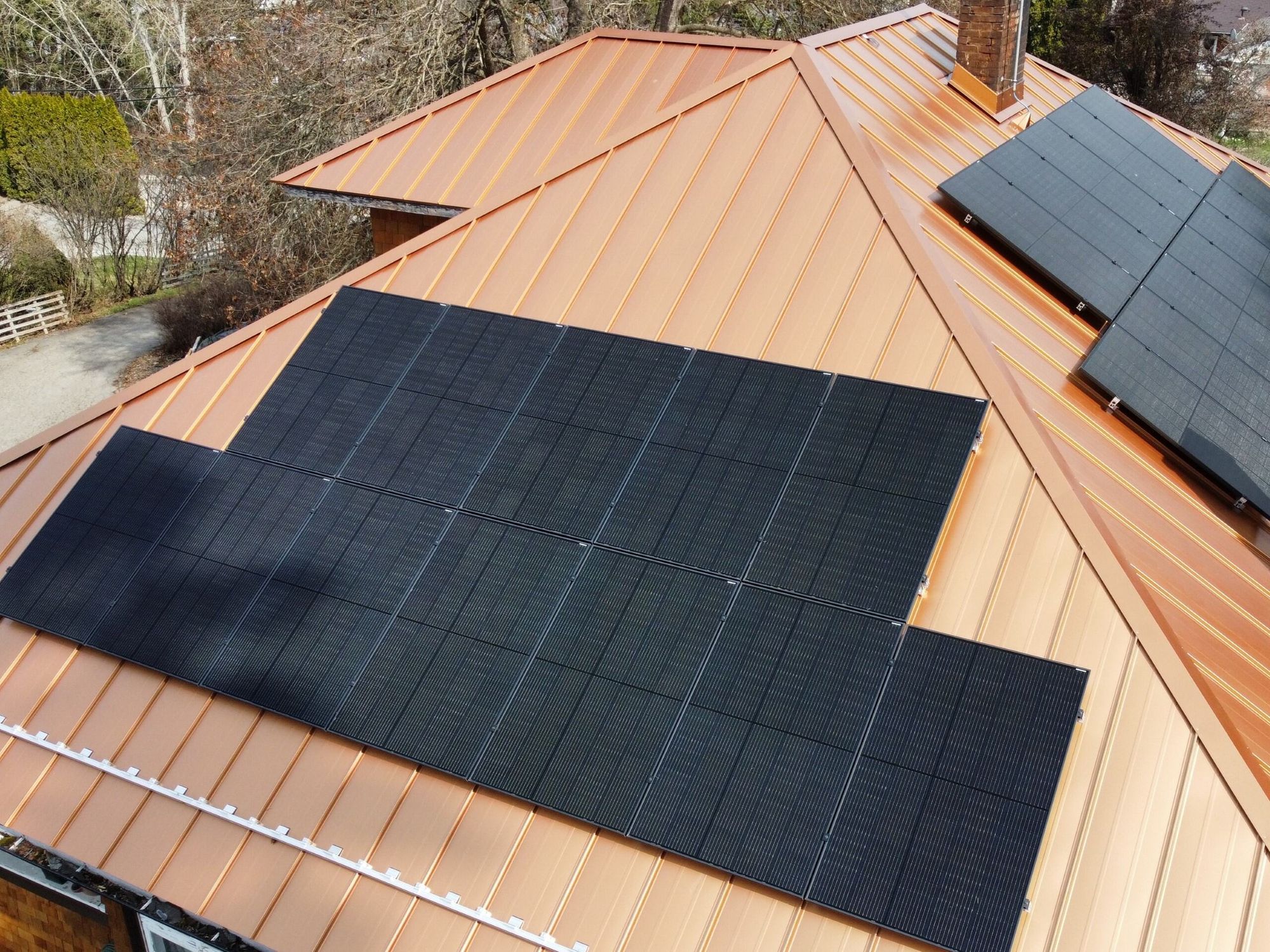
The first and most important input in figuring out how many solar panels you need is your household's annual electricity consumption.
This is measured in kilowatt-hours (kWh), and you can find it on your BC Hydro account. Most BC Hydro customers can download a full year of usage data through their online account, which gives a much more accurate picture than estimating from a single bill.
A typical Thompson-Okanagan household uses somewhere in the range of 8,000 to 12,000 kWh per year, though this varies significantly based on home size, heating type, and whether you have a pool, hot tub, or are planning to add an EV. Homes with electric heat or those located in colder microclimates tend to sit at the higher end of that range.
The goal of a solar panel system isn't always to offset 100% of your usage. Some homeowners aim for full offset, while others target 50-75% and accept a smaller hydro bill in exchange for a lower upfront cost. Either is a reasonable goal - it just needs to be defined before sizing begins.
Once your target energy offset is known, the next variable is panel output.
Modern residential solar panels typically produce between 400 and 440 watts each, though some higher-efficiency panels exceed that. A higher-wattage panel produces more electricity per panel, which means fewer panels are needed to hit the same production target - useful on roofs with limited space.
To get a rough sense of how many solar panels you need, you can divide your target annual production by the expected output of a single panel over a year. A 400-watt panel in a strong solar region like the Thompson-Okanagan might produce somewhere around 450-500 kWh per year, depending on orientation, tilt, and shading.
This is a simplified version of the calculation. In practice, a proper solar system design accounts for your specific roof orientation, local weather patterns, shading from trees or structures, and seasonal variation in sun hours - all of which affect real-world production.
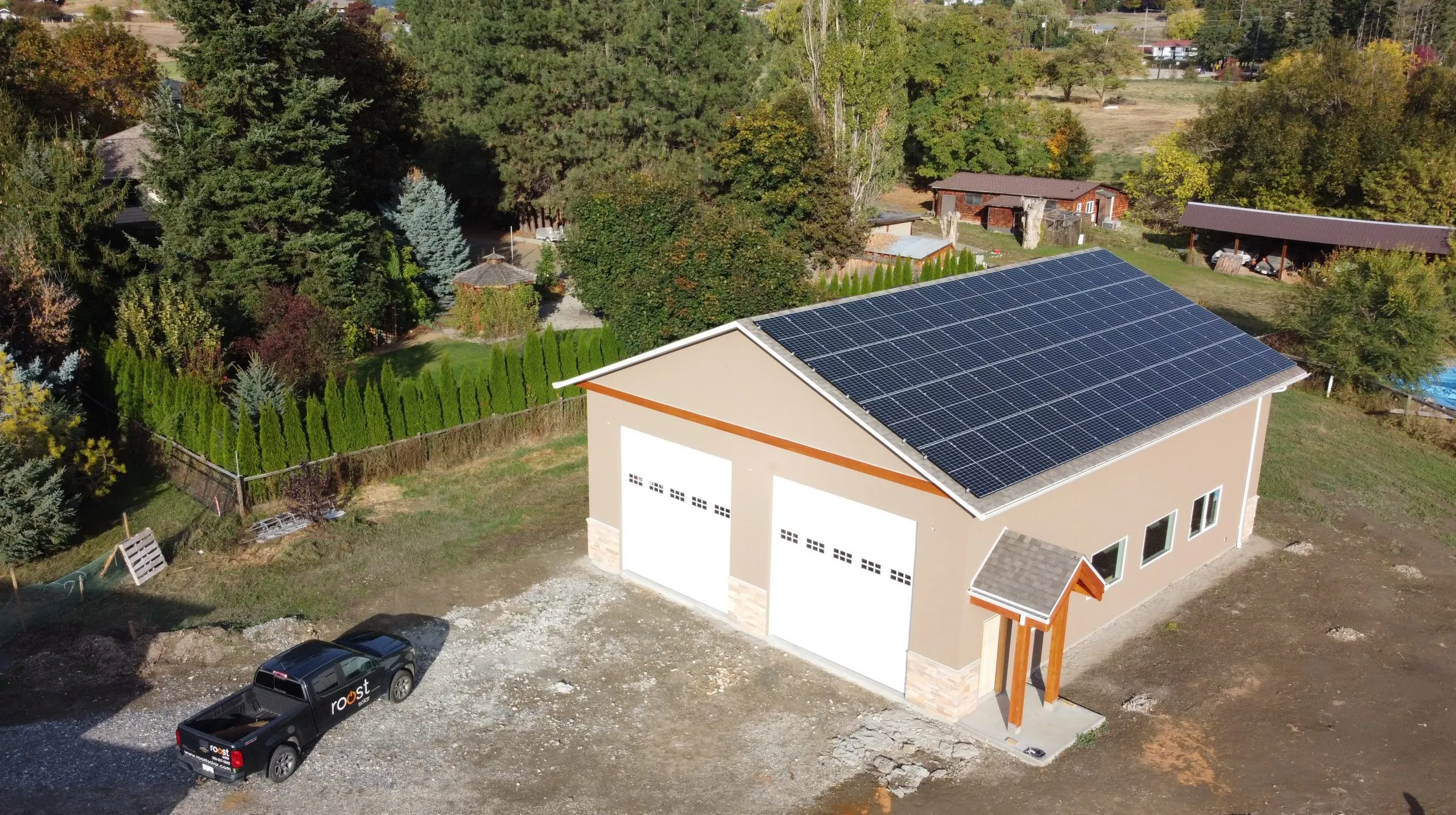
Even with a precise energy usage number, the answer to how many solar panels you need is shaped by what your roof can actually support.
South-facing roof sections with minimal shading produce the most energy per panel. East and west-facing sections still work well, just with somewhat lower output. North-facing sections are typically avoided unless no other option exists.
A roof with a smaller usable surface area, more complex geometry, or significant shading may not be able to fit enough panels to reach a 100% energy offset target - even if the math suggests it's needed. In these cases, the conversation shifts toward maximizing what the roof can support, or exploring a ground mount if the property has the space.
This is one of the reasons that a real site assessment matters more than an online calculator. Two homes with identical energy usage can need a very different number of panels depending entirely on their roof.
Online solar calculators can give a rough ballpark, but they can't account for the specifics of your property - your roof's actual orientation, the shade pattern from your neighbour's maple tree at 2pm in July, or the exact electrical service you have.
A proper sizing conversation starts with a site assessment. This typically includes a review of your historical energy usage, an evaluation of your roof's orientation and condition, a shading analysis, and a discussion of your goals - whether that's maximum offset, a specific bill target, or future plans like an EV or heat pump.
From there, a custom solar system design can determine the actual panel count, layout, and equipment that fits your home - not a generic estimate based on square footage alone.
To put some real numbers around this, here's roughly what panel counts can look like for different household profiles in the Thompson-Okanagan, assuming reasonably good roof conditions and 400-watt panels:
These are illustrative ranges, not quotes. Actual numbers shift based on your specific roof, shading, and equipment choices.
One detail worth considering when figuring out how many solar panels you need: are you planning any changes to your energy usage in the next several years?
An EV purchase, a heat pump installation, a pool, or a home addition can all significantly increase your electricity usage. If any of these are realistic possibilities, it's worth discussing them during the design phase. It's often more cost-effective to size a system slightly larger upfront than to add panels later, when scaffolding, permitting, and electrical work would need to happen a second time.
This doesn't mean overbuilding for hypothetical future needs - it just means having the conversation early, so your system is sized with your actual trajectory in mind.
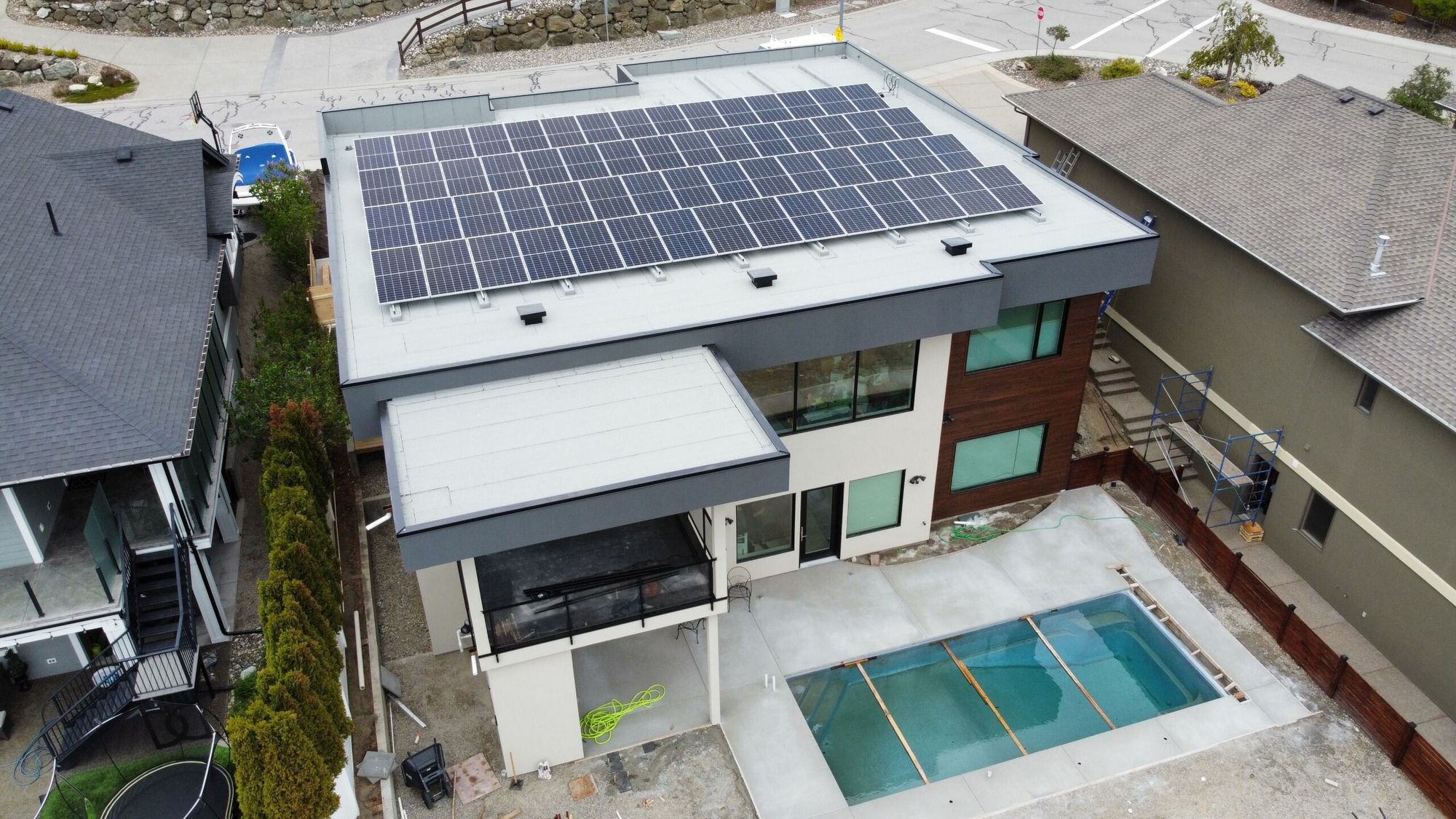
How many solar panels do I need? For most homeowners, the honest answer only comes after a real look at usage data, roof conditions, and goals - not from a generic online estimate.
The good news is that this process doesn't need to be complicated. With the right information gathered upfront, sizing a solar system is a straightforward exercise that leads to a design built specifically around your home.
Want an accurate answer for your specific property? Reach out to the Roost Solar team for a free estimate - we'll review your usage, assess your roof, and tell you exactly how many panels makes sense for your home.
How many solar panels do I need for an average home?
Most Thompson-Okanagan homes need somewhere between 15 and 30 panels, depending on energy usage, roof conditions, and how much of the electricity bill the system is meant to offset. The only way to get an accurate number is through a review of your actual usage data and a site assessment.
Does roof size limit how many solar panels I can install?
Yes, in some cases. A smaller or more complex roof may not have enough usable space to reach a full energy offset, even if the household's usage suggests more panels are needed. In those situations, a ground mount or a partial offset target may be the better path forward.
Should I size my system for my current usage or future usage?
It's worth considering both. If an EV, heat pump, or other major electricity use is a realistic possibility in the next few years, it's usually more cost-effective to factor that into the design now rather than adding panels later.
Do higher-wattage panels mean I need fewer of them?
Generally, yes. Higher-efficiency panels produce more electricity per panel, which can reduce the total panel count needed to hit the same production target. This can be especially useful on roofs with limited space.
How accurate are online solar panel calculators?
They can offer a rough starting point, but they typically can't account for your roof's specific orientation, shading patterns, or your actual historical usage. A real site assessment gives a far more accurate answer than an online estimate alone.

5101 25th Ave, Vernon, BC


