Quality solar, battery, and energy systems
designed for the Thompson Okanagan.
Built with care. Installed with integrity.
Engineered to deliver clean power for
decades.
For homeowners across Vernon, Kelowna, and the wider Thompson-Okanagan, residential solar panel installation is not a one-size-fits-all service. Every home has different rooflines, electrical configurations, usage patterns, and long-term goals.
A properly designed residential system begins long before panels are mounted. It starts with understanding the property, the homeowner’s energy profile, and the local utility structure. From there, each step builds toward a safe, code-compliant, and durable installation designed for decades of performance.
Below is a clear overview of how residential solar panel installation typically unfolds in the Thompson-Okanagan, from first conversation through final interconnection.
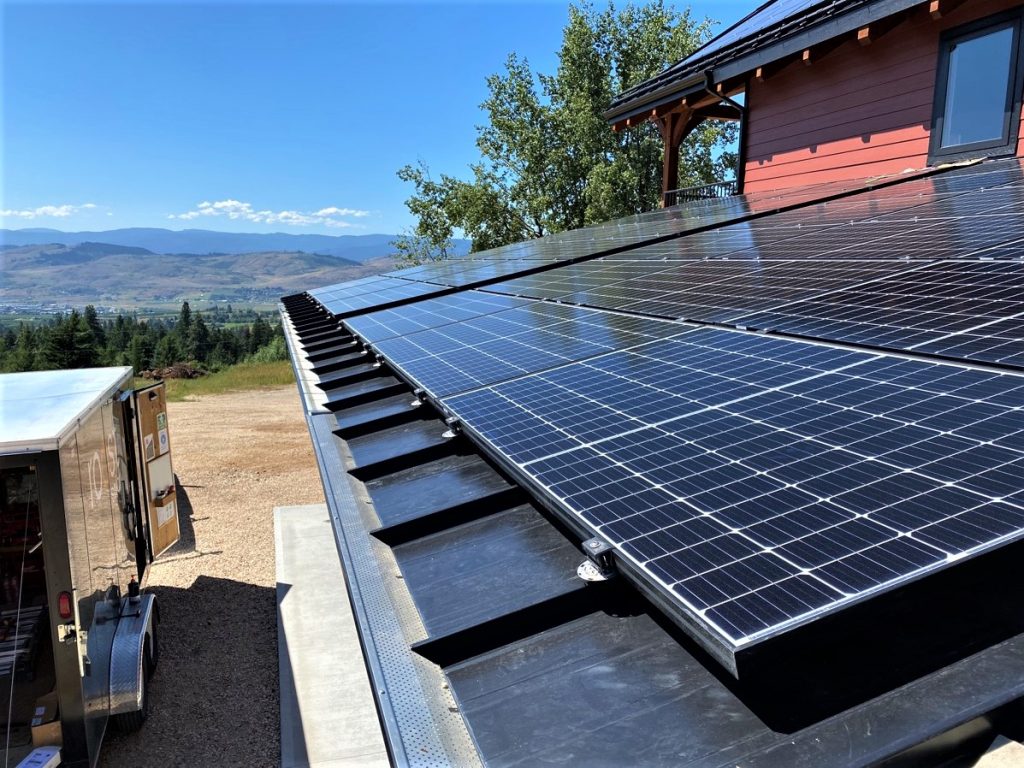
The first stage of residential solar panel installation is not technical. It is informational.
Homeowners typically begin with:
Electricity usage history is critical. Solar systems in the Okanagan are generally sized based on annual consumption, not guesswork. Reviewing past kilowatt-hour usage helps establish realistic production targets and avoids oversizing or undersizing the system.
At this stage, no assumptions are made. The goal is clarity.
Once initial goals are defined, the next step is evaluating the home itself.
A proper residential solar panel installation requires analyzing:
In the Thompson-Okanagan, solar exposure is generally strong, but roof geometry varies widely. Some homes are ideal candidates for large south-facing arrays. Others require careful layout design to maximize performance within limited space.
Solar modeling software is typically used to simulate annual production based on site conditions. This allows homeowners to see projected output before any equipment is ordered.
After confirming solar potential, system design begins.
A residential solar panel installation includes several coordinated components:
Equipment is selected based on roof type, electrical layout, and performance goals.
For example:
All design decisions must align with Canadian Electrical Code requirements and Technical Safety BC standards.
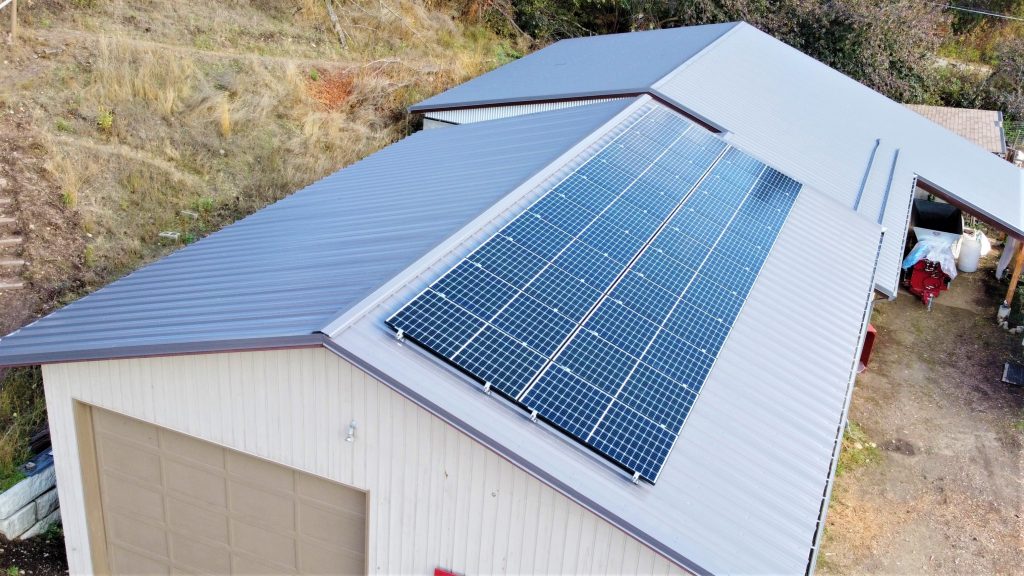
Before installation begins, approvals must be secured.
Residential solar panel installation in British Columbia requires:
In most of the Thompson-Okanagan, BC Hydro’s Self-Generation program governs grid-connected residential systems. In areas served by Fortis Electric, the Net Metering program applies.
Utility approval ensures the system can safely operate in parallel with the grid. No system is energized until proper authorization is granted.
Once design and permitting are complete, physical installation begins.
A professional residential solar panel installation typically includes:
Workmanship at this stage is critical. Proper flashing and sealing protect roof integrity. Clean wire management supports long-term durability and safety. All electrical connections must meet code and inspection standards.
In the Okanagan, installations must also account for snow loads, wind exposure, and seasonal temperature swings.
After installation, the system undergoes inspection and testing.
This includes:
Only after final approval is the system officially turned on.
At this point, homeowners can begin generating electricity and participating in their utility’s credit program.
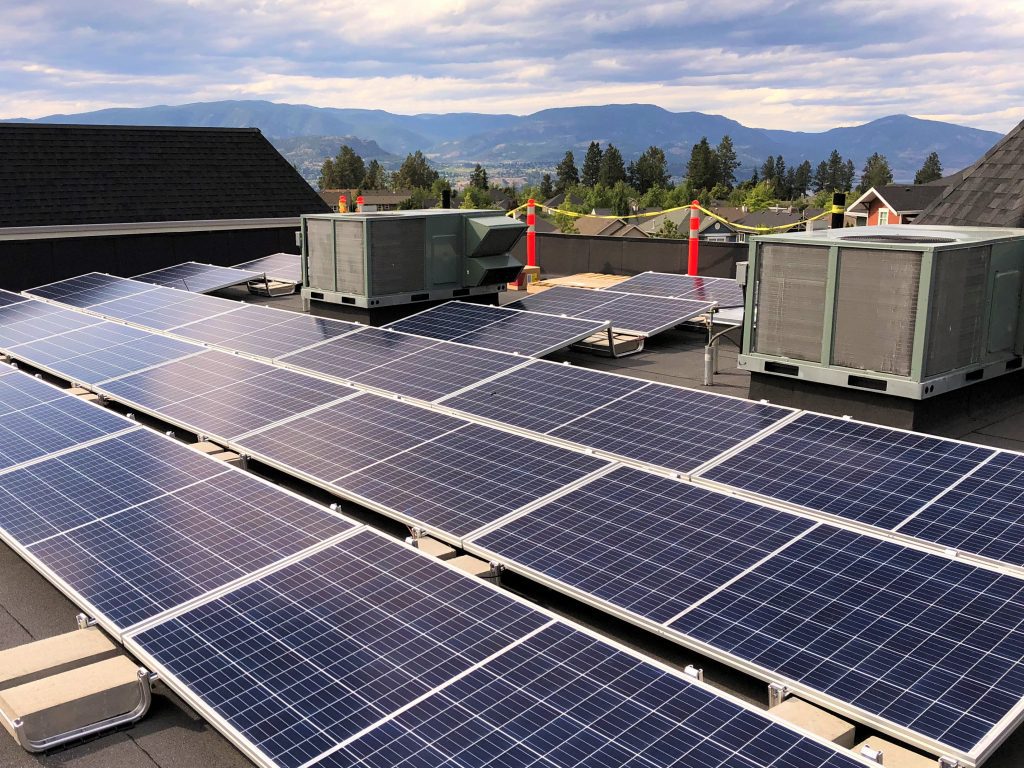
Modern residential solar panel installation includes integrated monitoring.
Depending on the equipment used, homeowners can access:
For eligible BC Hydro customers using compatible equipment, additional energy flow visibility may be available through expanded monitoring tools.
Monitoring does not require daily attention, but it provides transparency and long-term performance verification.
The Thompson-Okanagan offers strong solar exposure and well-defined seasonal production patterns.
Key regional factors include:
Because of these patterns, systems are typically evaluated on annual performance rather than month-to-month variation.
Solar is not designed to eliminate grid connection. It is designed to offset a portion of annual consumption while maintaining full compliance with local utility requirements.
How long does residential solar panel installation take?
The physical installation usually takes a few days. The full process, including permitting and utility approval, can take several weeks depending on timelines and inspection scheduling.
Will solar eliminate my electricity bill completely?
Not necessarily. Most systems are designed to offset a portion of annual usage rather than eliminate grid reliance entirely.
Do I need to replace my roof before installing solar?
If a roof is nearing the end of its lifespan, replacement is often recommended before installation. This avoids the need to remove and reinstall panels later.
Is residential solar panel installation different for rural properties?
The process is similar, provided grid access exists and utility interconnection requirements are met. Rural properties often have strong solar exposure.
What happens during a power outage?
Standard grid-connected systems shut down automatically during outages for safety reasons. Battery storage is required for backup power capability.
Is monitoring included?
Yes. Modern systems include manufacturer monitoring platforms. These provide visibility into production and performance over time.
Residential solar panel installation is not just about mounting equipment. It is a structured process involving design, permitting, electrical compliance, and long-term performance planning.
For homeowners across Vernon and the Thompson-Okanagan, the key is careful evaluation, transparent expectations, and disciplined workmanship.
When approached methodically, residential solar becomes a durable infrastructure upgrade that provides measurable value for decades, supported by monitoring, code compliance, and clear utility integration from day one.

5101 25th Ave, Vernon, BC


