Quality solar, battery, and energy systems
designed for the Thompson Okanagan.
Built with care. Installed with integrity.
Engineered to deliver clean power for
decades.
Across Canada, interest in electric vehicles continues to grow. Many homeowners in the Okanagan who are exploring solar energy are also considering an EV for their next vehicle purchase. The two technologies work well together. Installing an ev charger alongside a rooftop solar system can make home charging more efficient and lower long-term energy costs.
In simple terms, solar panels generate electricity during the day, and that electricity can help power your home and charge your vehicle. Solar installations and electric vehicles can produce a significant portion of the energy required for everyday driving.
For homeowners in the Okanagan who are evaluating solar, EV charging is increasingly becoming part of the conversation.
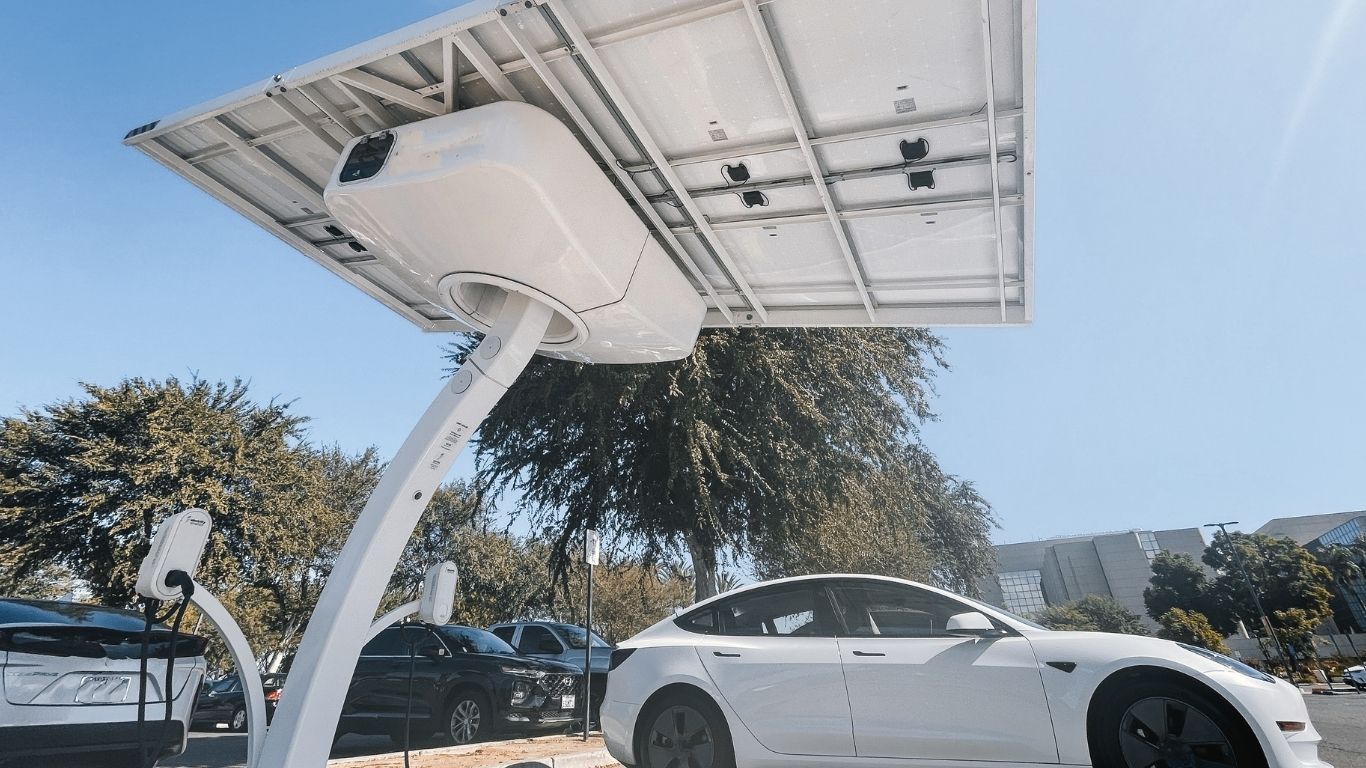
One reason electric vehicles are gaining traction is the convenience of charging at home. Public charging stations remain important, but many EV owners prefer to charge overnight using their home electrical system.
There are three main types of EV chargers:
Level 1 Chargers
These use a standard 120-volt household outlet. While convenient, they provide relatively little power and can take a long time to fully charge a vehicle.
Level 2 Chargers
These chargers operate on a 240-volt circuit similar to those used by electric stoves or dryers. They are commonly installed in homes and provide much faster charging than Level 1 systems. Most EVs can charge overnight using a Level 2 system.
Level 3 Chargers
Often referred to as fast chargers, Level 3 units are typically found at public charging stations. They provide rapid charging but are not normally installed in residential settings.
Because residential electricity rates are usually lower than public charging rates, charging at home is often the most economical option. Pairing home charging with solar energy can further reduce the cost of electricity used for transportation.
Solar panels generate electricity from sunlight and feed that energy into your home’s electrical system. When your solar array is producing power, that electricity can be used immediately in the home or exported to the grid.
When a EV charger is installed as part of a residential solar system, the solar array can offset a portion of the electricity used for charging an EV. Over the course of the year, this can significantly reduce the energy required from the grid.
In many cases, the levelized cost of electricity produced by solar panels is lower than the standard residential electricity rate.
For example, charging a vehicle with a 64 kWh battery may cost roughly:
Actual costs vary depending on electricity rates and system performance, but the comparison illustrates why many homeowners are interested in systems that support electric and solar powered vehicles.
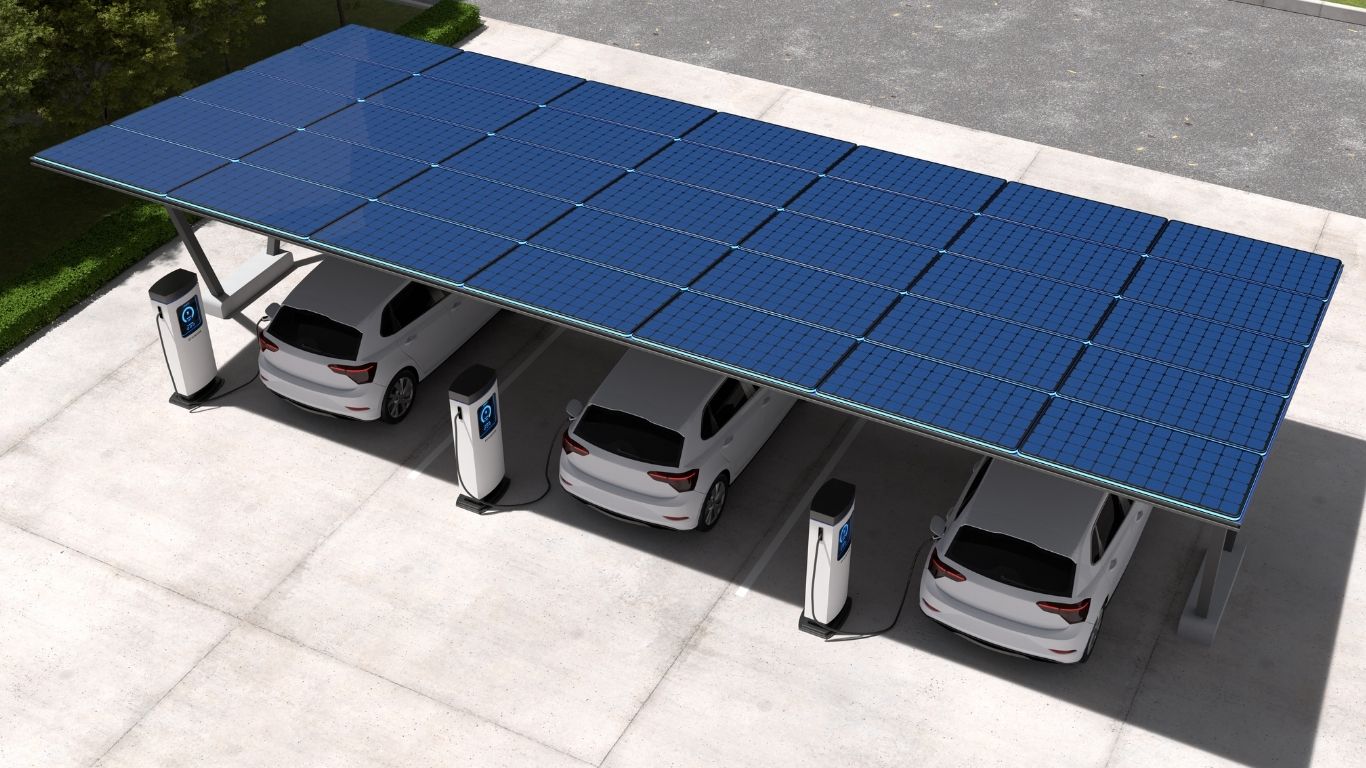
Electric vehicle efficiency varies between models, but solar energy can cover a surprising amount of driving energy.
As a general reference point, generating enough energy to drive approximately 15,000 km per year in an EV typically requires around seven or eight solar panels depending on system size and local production conditions.
In the Thompson-Okanagan region, strong summer solar production often offsets winter energy use over the course of the year. A properly designed system accounts for these seasonal differences and models annual production rather than focusing on daily output.
Some inverter platforms also simplify EV integration. For example, certain SolarEdge systems offer an integrated EV charging option that allows the charger to be incorporated directly into the solar system design.
For homeowners planning both solar panels and EV charging, installing the charger during the solar installation process can simplify the project.
When electrical work is already being completed for the solar array, adding an ev charger typically requires only modest additional materials and labour. Planning both systems together also allows for efficiencies with Electrician labour and electrical permit costs. Installing a charger during the solar installation process can also help ensure the system is designed for both household energy use and vehicle charging from the start.
While adding EV charging is straightforward in many homes, it does increase electrical demand.
Installing a charger requires an electrical load calculation to determine how much capacity is available in the home’s electrical panel. In some cases, homes with 100-amp service may need an upgrade to 200-amp service to support both the home’s electrical needs and EV charging.
Some newer homes are already wired to accommodate EV chargers, but many existing homes require retrofitting. Factors that influence installation requirements include:
Because every home is different, a site evaluation is typically required before installation.
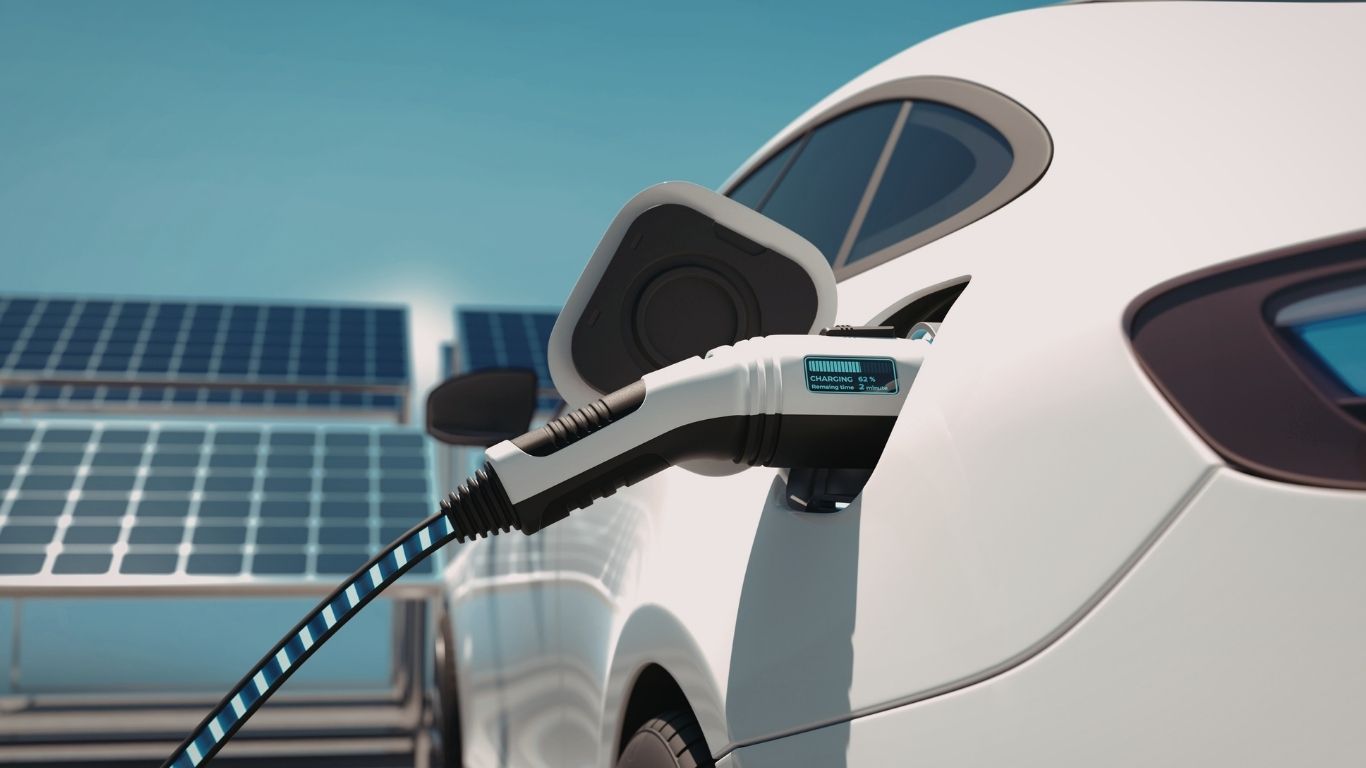
The Okanagan has become an increasingly active region for residential solar adoption. Strong sunlight during the spring and summer months helps solar systems generate substantial energy across the year.
For homeowners considering both solar panels and EV ownership, combining the two technologies can provide a practical way to manage household energy use. Systems that support electric and solar powered vehicles allow residents to use locally generated electricity to power both their homes and their transportation.
Companies like Roost Solar work with homeowners across the Thompson-Okanagan to design systems that match local conditions, household energy use, and future plans such as EV charging.
For homeowners thinking about electric vehicles, planning ahead can make the transition easier.
A solar assessment can evaluate:
Understanding these factors helps ensure the solar system and EV charging infrastructure are designed to work together effectively.
Interest in electric vehicles and residential solar continues to grow across the Okanagan. When installed together, the two technologies can complement each other in practical ways.
A properly designed solar system paired with an ev charger can help offset a portion of the electricity required for driving, while also supporting household energy use. Over time, this approach can provide greater visibility into energy consumption and long-term electricity costs.
For homeowners exploring electric vehicles, a professional assessment is the best way to understand how solar and EV charging could work for a specific property.
Can solar panels fully charge an electric vehicle?
Solar panels can generate enough electricity over the course of a year to offset the energy used by an electric vehicle. The exact amount depends on the system size, vehicle efficiency, and household energy consumption.
What is a solar EV charger?
A solar ev charger is typically a Level 2 home charging station connected to a home electrical system that is partially powered by solar panels. The charger itself draws electricity from the home, which may be supplied by solar production when available.
How many solar panels are needed to support EV driving?
In many cases, producing enough energy for approximately 15,000 km of EV driving annually may require around seven or eight solar panels. Actual requirements vary depending on panel output, system design, and local sunlight conditions.
Can a home with 100-amp service install an EV charger?
Some homes with 100-amp electrical service can support EV charging, but others may require an upgrade to 200-amp service. A load calculation is typically required to determine whether an upgrade is necessary.
Is EV charging practical in the Okanagan?
Yes. The Okanagan receives strong seasonal sunlight, which can support meaningful solar production over the course of a year. When designed correctly, solar systems can offset a portion of the electricity used for both household consumption and EV charging.
At Roost Solar, we’re proud to help clients across the Thompson-Okanagan design and install systems that maximise their grid tied solar savings in BC through careful engineering, top-tier components, and transparent support.
Start saving smarter with renewable energy today.

5101 25th Ave, Vernon, BC


