Quality solar, battery, and energy systems
designed for the Thompson Okanagan.
Built with care. Installed with integrity.
Engineered to deliver clean power for
decades.
Vernon sits at the heart of one of Canada's best solar regions - and yet solar panels remain an underutilized asset for many homeowners and businesses in the city. Strong sun hours, rising BC Hydro rates, and a supportive self-generation program make Vernon one of the more compelling places in BC to go solar. The question for most people isn't whether Vernon is a good solar market. It is. The question is what a well-designed solar system actually looks like for a Vernon property specifically.
Roost Solar has been designing and installing solar panels across Vernon and the North Okanagan since 2016 - with an office and warehouse right here in the city. Here's what Vernon homeowners and businesses need to know before going solar.
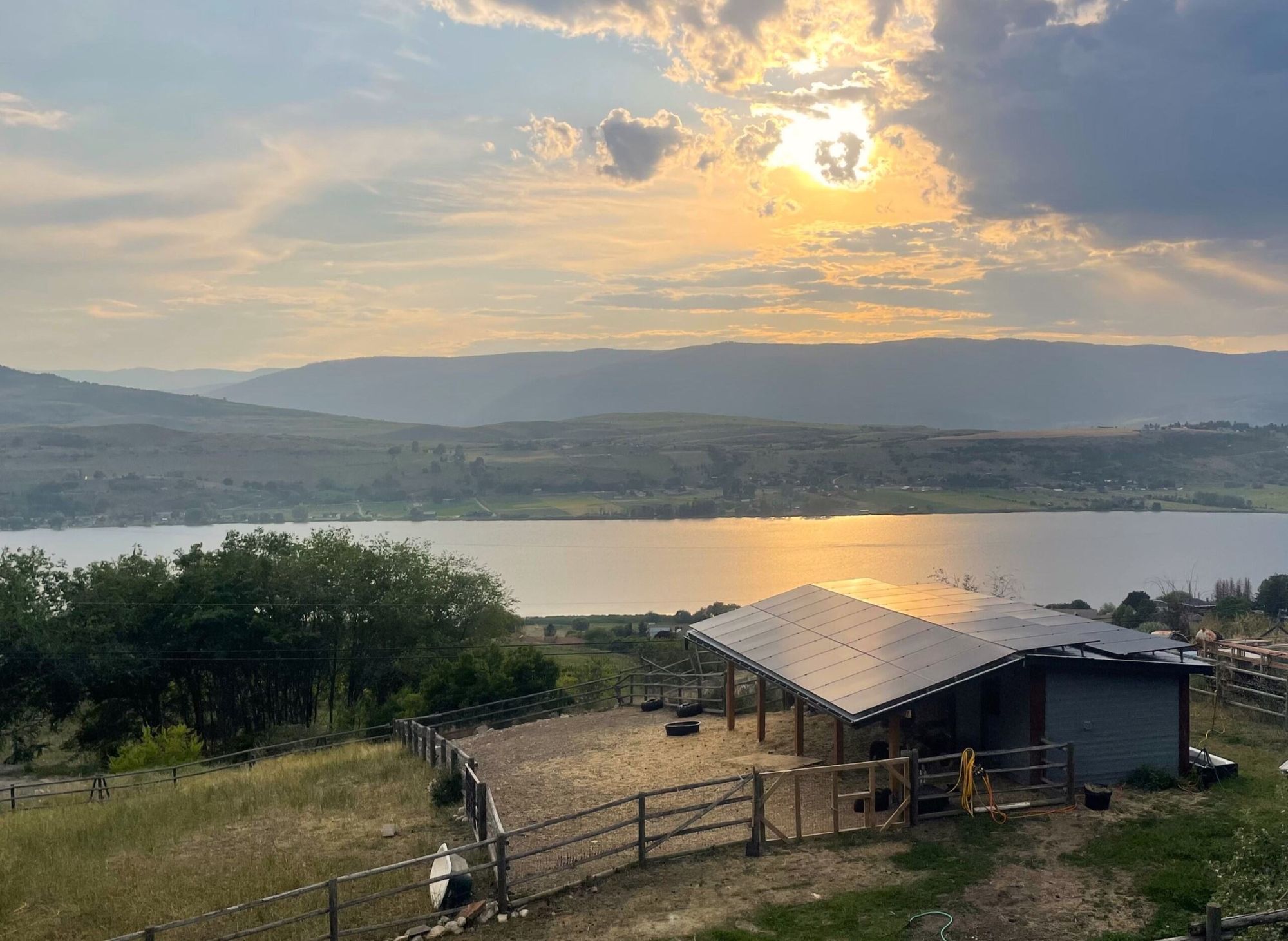
Vernon's solar advantage starts with geography. The city sits in the North Okanagan at an elevation and latitude that delivers strong annual sun hours - well above the Canadian average and significantly more than coastal BC. That solar resource is the foundation of every financial case for solar panels in Vernon.
The semi-arid climate works in solar's favour beyond just sun hours. Dry conditions are gentler on solar equipment than the humid coastal environment, supporting longer equipment lifespan and more consistent long-term performance. Rising BC Hydro rates add to the picture. Every kilowatt-hour your solar panels produce is one you're not buying at today's rates - and as rates increase over time, the value of that self-generated electricity grows alongside them. For Vernon homeowners planning to stay in their property for 10 or more years, the long-term value of a well-designed solar system is substantial.
Vernon is a diverse city, and that diversity shows up in solar system design in specific ways. What works for a newer subdivision home in Bella Vista looks different from what's right for an established home in Harwood, a commercial property near the highway, or an agricultural operation on the city's outskirts.
Roof age and condition come up more often in Vernon than in newer communities. Neighbourhoods across the city have a significant proportion of homes built in the 1980s and 1990s, some of which have roofs approaching the end of their useful life. Installing solar panels on a roof that will need replacing within 10 years is worth avoiding - replacing a roof with panels already on it adds meaningful cost to what would otherwise be a straightforward re-roof. A good installer will flag this upfront.
Roof geometry varies considerably across Vernon's neighbourhoods. Some neighbourhoods tend to have more complex rooflines - multiple faces, dormers, vents, and obstructions that limit usable panel area. Other neighbourhoods typically have simpler pitches and cleaner south-, east- or west-facing sections that are well suited to solar. In cases where roof space is genuinely limited, a ground mount on available property is often worth exploring.
Electrical service is another variable that comes up regularly in Vernon. Homes with older electrical panels may require a main panel upgrade or a service upgrade before a solar system can be properly connected. This is a cost worth assessing and accounting for upfront - a thorough quote will include it rather than surfacing it as a surprise after the fact. Roost Solar operates as a Licensed Electrical Contractor with an in-house team, which means electrical scope is assessed as part of every system design from the start.
Agricultural and rural properties on Vernon's edges represent some of the strongest solar opportunities in the region. Large roof areas on barns and outbuildings, significant operational energy loads, and available land for ground-mounted arrays combine to create compelling financial cases - particularly for businesses eligible for the federal 30% Clean Technology Investment Tax Credit.

For Vernon homeowners, the core solar decision comes down to a few practical questions: how much of your electricity bill can solar realistically offset, what does the system cost, and how long before it pays for itself?
Most residential solar systems in Vernon fall in the range of 8 kW to 20 kW, depending on household energy usage, roof space, and offset goals. Payback periods for well-designed systems in the region typically fall between 8 and 12 years, after which the system continues generating value for 30 or more years.
Homes with higher electricity usage - electric heat, EV charging, a hot tub or pool - see the strongest financial returns, since there's more consumption for solar to offset. Households planning to add an EV or heat pump in the coming years are also worth sizing for future usage rather than current loads alone.
BC Hydro's self-generation program makes the seasonal math work year-round. Vernon's long, sunny summers generate surplus production that generates monetary credits that can be drawn down through the shorter winter months - effectively using the grid as seasonal storage and delivering value across every month of the year.
Commercial solar in Vernon has grown steadily, driven by improved federal incentives and the city's strong solar resource. Eligible businesses can access the federal 30% Clean Technology Investment Tax Credit, which has made commercial solar financially straightforward for a wide range of operations - from retail and hospitality businesses to larger industrial and agricultural facilities.
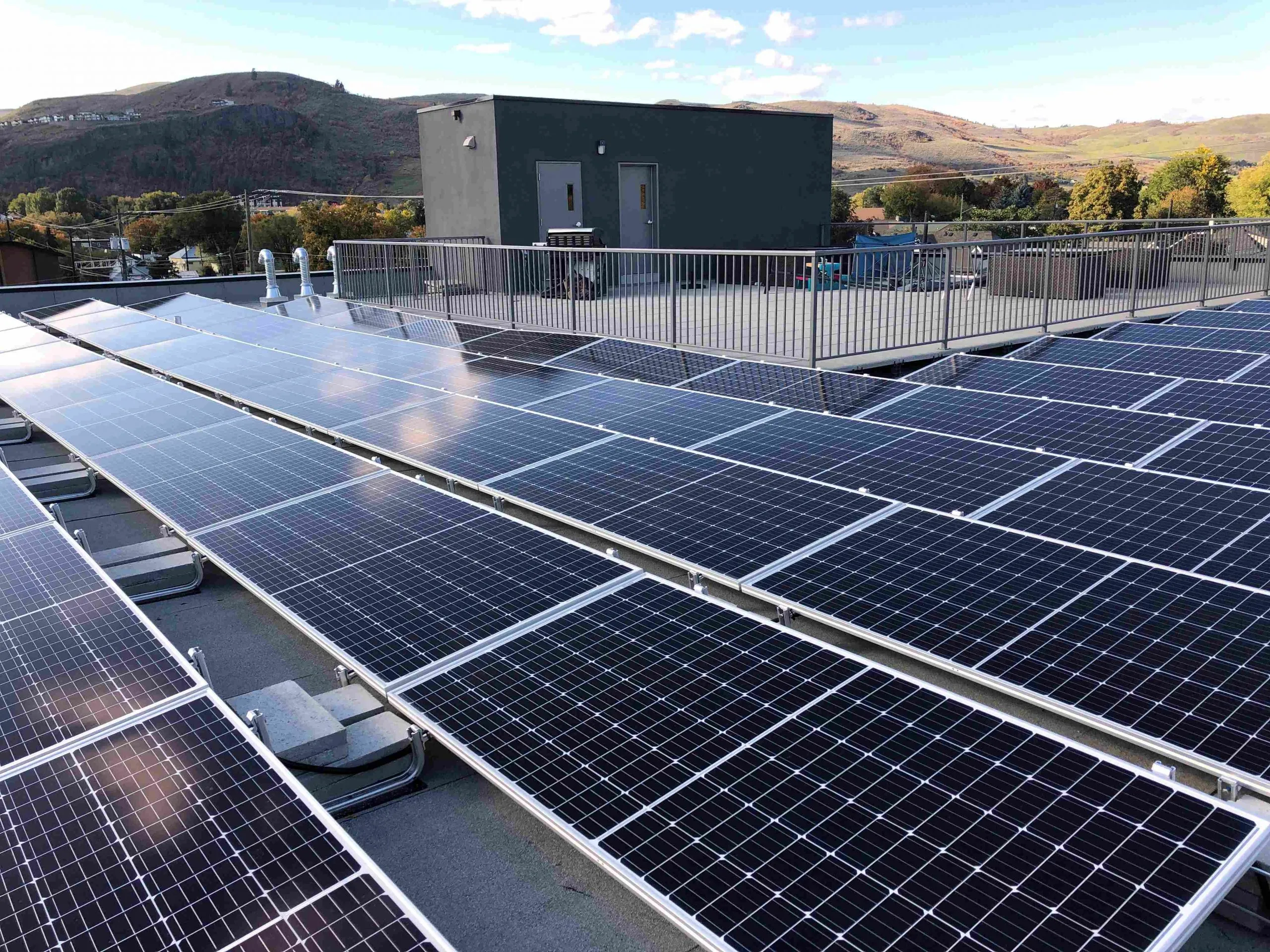
Vernon's commercial building stock includes a mix of flat-roof commercial properties, metal-roof agricultural buildings, and light industrial facilities - all of which are well suited to solar installation. Flat roofs use ballasted racking systems that maximize panel area without roof penetrations. Metal roofs - common on barns and shops across the North Okanagan - are among the most compatible surfaces for solar, with clamp-based mounting systems that avoid penetrations entirely.
You can see what commercial and agricultural solar looks like in practice across Roost Solar's completed installations in Vernon and the surrounding region.
For Vernon homeowners and businesses going solar for the first time, understanding the process from quote to commissioning sets realistic expectations.
It includes a site assessment - a real look at your roof, electrical service, and energy usage. From there, a system is designed around your specific property and goals, with equipment specified for long-term performance in North Okanagan conditions. Electrical permits are required for every installation in BC, and BC Hydro grid interconnection approval is a multi-step process managed by your installer. Roost Solar handles permitting and interconnection from start to finish on every project.
Installation itself is typically completed in two to four days for a residential system. Commissioning and monitoring setup are completed before the team leaves your property.
Because Roost Solar's office and warehouse are located in Vernon - with panels, inverters, racking, and electrical components stocked on site - projects move forward efficiently and service or warranty needs can be addressed quickly when they arise.
Vernon sits in one of Canada's strongest solar regions, with the sun hours, climate, and utility programs to back it up. For homeowners and businesses in the city, solar panels are a long-term asset that delivers clean energy and real financial returns - provided the system is designed around your specific property and goals rather than a generic template.
That's the kind of work Roost Solar has been doing in Vernon since 2016. Local experience, in-house installation, and a team that's here for the long arc of your system's life.
Curious what solar panels could deliver for your Vernon property? Reach out to the Roost Solar team for a free estimate - we'll assess your site and put together a design built around your home or business.
Are solar panels worth it in Vernon, BC?
For most Vernon homeowners and businesses with reasonable roof conditions and meaningful electricity usage, yes. Vernon's strong annual sun hours, rising BC Hydro rates, and BC Hydros self-generation program together create a compelling long-term financial case. Payback periods for well-designed residential systems in the region typically fall between 10 and 12 years.
What size solar system do most Vernon homeowners install?
Most residential systems in Vernon fall in the range of 8 kW to 15 kW, depending on household energy usage, roof space, and energy offset goals. Homes with electric heat, EV charging, or other high-consumption loads typically benefit from larger systems.
Does roof age affect solar panel installation in Vernon?
Yes - and it's worth assessing before committing to solar. Replacing a roof after panels are already installed adds significant cost compared to re-roofing beforehand. A good installer will flag roof condition as part of the site assessment.
Does my Vernon home need an electrical panel upgrade for solar?
Possibly. Older Vernon homes may require a main panel upgrade or a service upgrade before a solar system can be properly connected. This should be assessed and included in any thorough solar quote - not treated as an installation surprise.
How does Roost Solar's Vernon location benefit customers?
Roost Solar's office and warehouse are located in Vernon, with solar panels, inverters, racking, and electrical components stocked on site. This means projects move forward efficiently and service or warranty needs can be addressed quickly - a meaningful advantage over out-of-town providers with no local presence.

5101 25th Ave, Vernon, BC


