Quality solar, battery, and energy systems
designed for the Thompson Okanagan.
Built with care. Installed with integrity.
Engineered to deliver clean power for
decades.
Solar remains the fastest growing segment of the global electricity supply. In the first half of 2025 alone, the world added a record 380 gigawatts of new solar capacity, a 64% increase over the same period in 2024. This growth shows that solar deployment remains robust even as markets mature.
Industry forecasts project that global new solar additions will reach around 655 GW in 2025, a roughly 10% increase from previous years, and that additions will continue growing steadily through the late 2020s.
This ongoing expansion reflects multi-sector demand—from utility-scale projects to commercial rooftops and residential systems—despite variability in policy support across regions.
Solar is not just growing—it’s reshaping the energy mix. In 2025, renewable generation including solar and wind exceeded coal power output globally for the first time, marking a major milestone in the energy transition. Solar’s strong performance—helping meet 83% of the demand increase in renewable generation—illustrates its expanding role in power systems worldwide.
This trend highlights that solar is no longer a niche or supplemental technology; it’s becoming a central part of how countries meet their power needs.
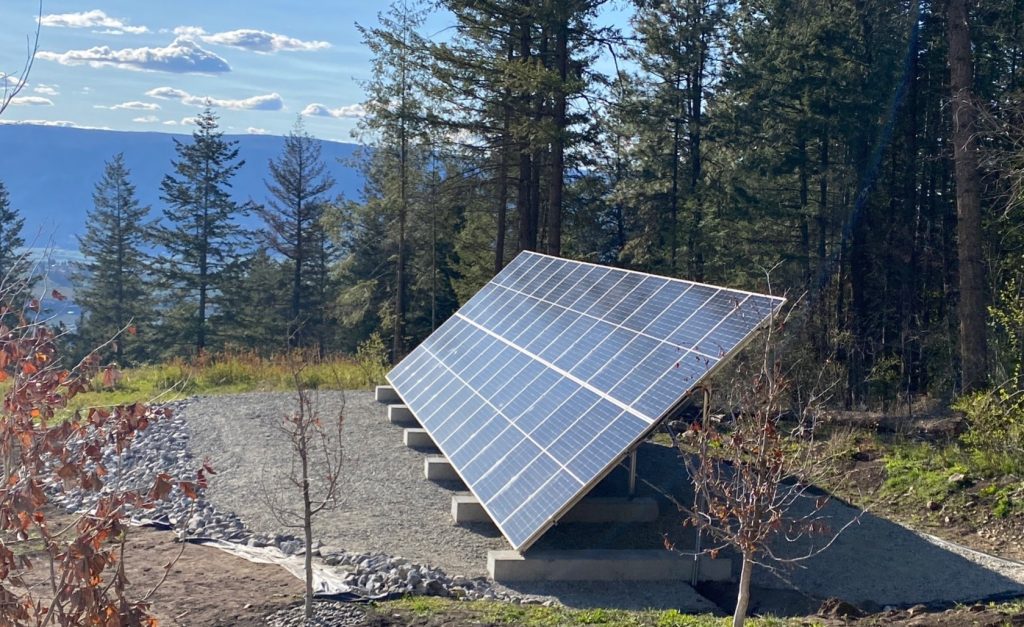
Despite overall strong expansion, the pace of growth isn’t uniform everywhere.
For example, in the European Union, reduced subsidies and changing policy support have led to a slight decline in new installations in 2025 compared with the previous year—the first such slowdown in over a decade.
Meanwhile, major clean energy markets such as India are supporting massive rooftop solar rollouts. India anticipates that rooftop solar installations could double to around 4 million by March 2026 under new government programs aimed at reducing costs and streamlining adoption.
These examples show that solar adoption is still accelerating, but its pace is shaped strongly by local policy, incentives, and market conditions.
Longer-term projections support sustained solar growth. Research by SolarPower Europe anticipates annual new capacity additions continuing in double-digit percentages through 2027–2029, and installed capacity nearing 930 GW of annual additions by the end of the decade under a stable growth scenario.
At the same time, broader renewable electricity generation is forecast to grow significantly—potentially increasing by as much as 60% between 2024 and 2030—with solar PV accounting for more than half of that growth.
While forecasts vary by region and modeling assumptions, the overall direction is clear: solar adoption and integration into power grids continue upward.
Canada’s solar market is expanding too. Estimates suggest that solar capacity in Canada reached roughly 7.9 GW in 2025, and models project continued growth into the 2030s as solar becomes a larger part of the country’s energy mix.
Industry analyses also point to strong market momentum driven by government incentives, declining technology costs, and increasing interest from both residential and commercial customers.
Importantly, growth in behind-the-meter solar—such as rooftop and distributed solar—has been particularly active in Canada during 2025, with installations outpacing previous years.
The solar cell industry itself is expanding, driven by demand for efficient panels and lower cost technologies. Estimates put the global solar cell market at nearly $159 billion in 2025, with projections estimating substantial expansion in the coming decade. This industrial growth supports broader solar adoption by enabling more competitive pricing on modules, making solar accessible to more regions and applications.

Different regions are advancing solar adoption in distinct ways:
China continues to lead in manufacturing and installed capacity, holding a dominant share of the global photovoltaic supply chain and pushing capacity beyond 1 terawatt.
India is amplifying solar through government-backed residential programs that aim to accelerate rooftop adoption.
Parts of Europe are experiencing growth that depends heavily on policy incentives, with adjustments affecting pace year-to-year.
These diverse dynamics underscore that solar adoption is as much about policy and economics as it is about technology.
Several key drivers continue to underpin solar adoption trends in 2025 and 2026:
Falling costs of photovoltaic technology, aided by global manufacturing scale and competitive markets.
Corporate and industrial demand, driven by sustainability goals and net-zero commitments from major companies.
Residential adoption programs, supported by government incentives that reduce upfront costs.
Grid integration improvements as energy systems evolve to accommodate variable renewable generation.
These forces combine to make solar compelling for homeowners, businesses, and utilities alike.
Solar adoption does not happen in isolation. Trends increasingly show that coupling solar with energy storage, upgrading grid infrastructure, and evolving policy frameworks are essential to maximizing solar’s value.
As solar becomes a larger share of electricity options, these integration factors will shape how adoption unfolds regionally and globally.
Solar adoption continues to grow in 2025 and into 2026, with strong global capacity additions, expanding markets, and evolving policy environments. While regional differences exist, the overarching trend is clear: solar energy is becoming a foundational part of the world’s energy system—valued for its sustainability, decreasing costs, and reliability.
Understanding these trends helps homeowners and businesses make informed decisions about investing in their own solar projects and aligning with broader energy transitions.
5101 25th Ave, Vernon, BC


